Updating your news feed...
NEWS EXPRESS is Nigeria’s leading online newspaper. Published by Africa’s international award-winning journalist, Mr. Isaac Umunna, NEWS EXPRESS is Nigeria’s first truly professional online daily newspaper. It is published from Lagos, Nigeria’s economic and media hub, and has a provision for occasional special print editions. Thanks to our vast network of sources and dedicated team of professional journalists and contributors spread across Nigeria and overseas, NEWS EXPRESS has become synonymous with newsbreaks and exclusive stories from around the world.








Loading banners
Loading banners...

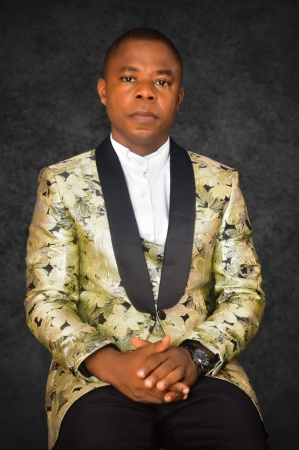
Fr Dr Okhueleigbe Osemhantie mos
By Fr. OKHUELEIGBE OSEMHANTIE ÃMOS
The expression “take a bow and go” has regrettably become shorthand for the trivialisation of legislative responsibility in Nigeria. What the Constitution envisages as a robust mechanism of checks and balances has too often dwindled into a ceremonial display in which nominees are introduced, allowed to make brief remarks, and passed without probing. Civil society groups and public commentators have long lamented that this pattern weakens democratic oversight. Such tendencies risk reducing the Senate to an extension of executive preference, thereby undermining the principle of separation of powers, a doctrine articulated by Montesquieu (1748) to prevent the fusion of authority.
The recent case of retired General Christopher Musa’s ministerial confirmation temporarily interrupted this downward drift. On 3 December 2025, during his screening as Minister of Defence, the Senate departed from the familiar script of perfunctory approval. A motion to allow him to “take a bow and go” was raised and decisively rejected, signalling a brief resurgence of institutional seriousness. The Senate President maintained that a cursory procedure would be indefensible at a time of heightened insecurity when Nigerians expect responsibility from all organs of State (National Update, 2025).
The scrutiny of Musa was driven by concrete security concerns. Senators demanded explanations for the withdrawal of troops from Government Comprehensive Girls Secondary School in Maga, Kebbi State, shortly before the abduction of schoolgirls, an incident widely criticised as a grave security lapse (Telegraph Nigeria, 2025). They also questioned him on the killing of Brigadier-General Musa Uba in Borno, an event that exposed the vulnerabilities of command structure and internal discipline within the armed forces (ThisDay 2025). Furthermore, legislators raised broader issues that have long weakened defence operations: outdated military equipment, inadequate intelligence coordination, fragile logistics, and chronic underfunding, factors repeatedly cited in national debates on counter-insurgency effectiveness (ThisDay 2025).
Musa responded by pledging an immediate investigation into the troop withdrawal and outlining reforms centred on improved inter-agency intelligence, strengthened community engagement, and an overhaul of defence infrastructure. He firmly rejected ransom payment or negotiation with terrorist groups, arguing that such practices embolden violent actors and weaken State authority (AllAfrica, 2025). His answers, while assertive, illuminated the depth of structural erosion within Nigeria’s security framework.
What is striking is that a hearing of this nature was treated as extraordinary. Yet, from the standpoint of constitutional logic, this level of scrutiny is the Senate’s ordinary duty. The national reaction accentuates how rare genuine oversight has become in public perception. A legislature that interrogates executive nominees only under exceptional pressure is not functioning as a co-equal branch but as a reactive institution stirred only by crisis. This signals a weakened institutional memory and a troubling normalisation of deference inconsistent with democratic design (Montesquieu, 1748; Madison, 1788).
The persistence of the “take a bow and go” culture carries serious implications. It blurs the separation of powers by surrendering oversight to the executive. It erodes public confidence, especially in moments when governance failures have direct consequences for lives and livelihoods. It reduces the standards for public service, allowing ritual to replace substantive evaluation of competence, integrity, and readiness for high office. Most dangerously, it fosters impunity in critical sectors such as defence and internal security, where failures of scrutiny can be fatal.
The Christopher Musa hearing restored, however briefly, a measure of procedural dignity. But isolated moments of firmness cannot replace systemic reform. The Senate must embrace this episode not as an exception but as a reminder of its constitutional vocation. A democracy cannot be sustained on sporadic flashes of institutional courage; it requires the steady, habitual exercise of oversight. For Nigeria to rebuild public trust and strengthen the rule of law, the culture of “take a bow and go” must be abandoned, and rigorous scrutiny must become the norm rather than a momentary departure.
We ought to be the giant of Africa: a republic, the largest Black nation in the world, Africa’s most populous country, endowed with immense human and natural resources. A Senate that relinquishes its authority is a liability to such a nation in the comity of states. When legislative power falters, a country’s moral authority falters with it.
•Fr. Dr. Okhueleigbe Osemhantie Ãmos is a priest of the Catholic Diocese of Uromi and a Lecturer at CIWA, Port Harcourt, Nigeria.