
Updating your news feed...
NEWS EXPRESS is Nigeria’s leading online newspaper. Published by Africa’s international award-winning journalist, Mr. Isaac Umunna, NEWS EXPRESS is Nigeria’s first truly professional online daily newspaper. It is published from Lagos, Nigeria’s economic and media hub, and has a provision for occasional special print editions. Thanks to our vast network of sources and dedicated team of professional journalists and contributors spread across Nigeria and overseas, NEWS EXPRESS has become synonymous with newsbreaks and exclusive stories from around the world.
.webp)



Loading banners
Loading banners...

National Electricity Regulatory Commission NERC logo
Nigeria’s power sector is now facing a leadership vacuum that threatens to derail fragile reform efforts and drive away billions in desperately needed investment.
Five months after the retirement of Sanusi Garba, Nigerian Electricity Regulatory Commission (NERC) chairman, the critical position remains unfilled, leaving the sector’s apex regulatory body in limbo in what analysts describe as the most consequential moment in its two-decade history.
Meanwhile, Bayo Adelabu, minister of Power, has openly declared his intention to contest the 2027 Oyo State governorship election, raising questions about his commitment to fixing a sector that keeps 200 million Nigerians in darkness for hours each day.
The twin leadership concerns – one at the regulatory level, another at the ministerial – have created what industry insiders call a perfect storm of uncertainty in a sector that requires decades of consistent policy implementation and an estimated $30 billion in private investment to achieve even basic functionality.
“The power sector is a sensitive industry with far-reaching impact on every segment of the Nigerian economy,” said Adebayo Adegbemle, power sector analyst and executive director of Power Up Nigeria. “Our inability to fill up the chairman’s position does not send good signals to the investing world, and we should be careful. We are playing with ripple effects that we may not be able to control.”
President Bola Tinubu made an attempt to replace Garba in August 2025, nominating Abdullahi Ramat for the position.
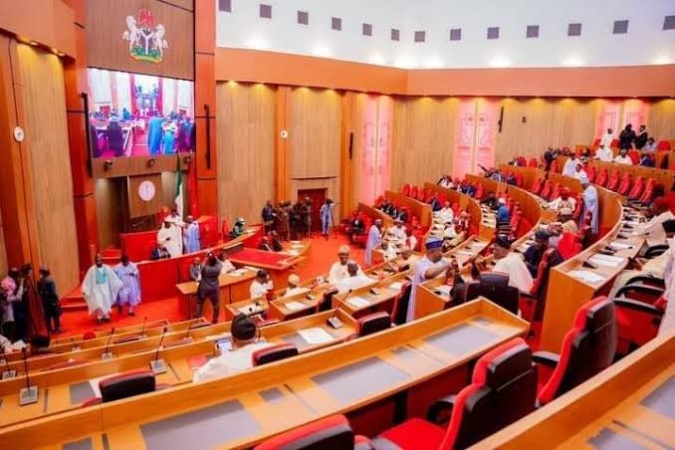
However, Ramat’s confirmation has stalled in the National Assembly, where senators are reportedly conducting due diligence on the nominee.
The delay has now stretched far beyond the three-week constitutional deadline mandated by the Electricity Act 2023 for filling vacancies in the chairman or vice chairman positions.
The extended vacancy is particularly problematic given the NERC’s expanded mandate under the 2023 Electricity Act. The commission is responsible for setting the strategic direction of Nigeria’s electricity supply industry, licensing operators, determining tariffs, and ensuring service standards are met across generation, transmission, and distribution segments.
Without a confirmed chairman, critical decisions on tariff adjustments, new license applications, and enforcement actions exist in a grey zone that makes investors nervous.
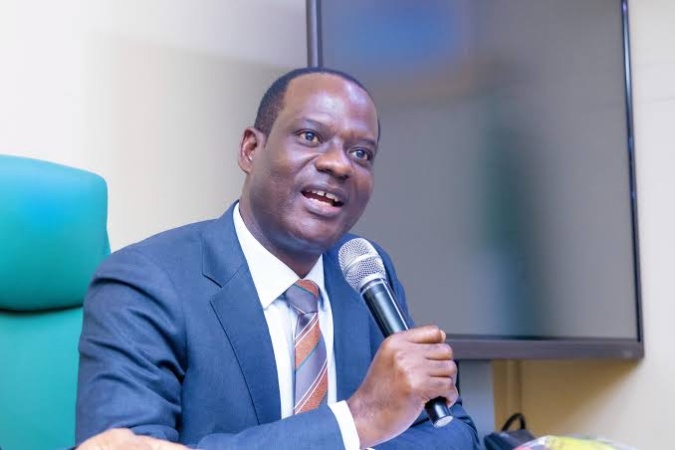
Lanre Elatuyi, another power sector analyst, confirmed that while an acting chairman is currently managing the commission, the uncertainty is untenable for a sector at such a critical juncture.
“NESI is at a critical stage, and there is a need for strong regulatory oversight to ensure certainties of regulations in the sector,” Elatuyi said. “We can’t deny the concerns that came up with the nomination of the chairman and the way and manner he conducted himself at the commission’s office after his announcement.”
Those concerns, according to industry sources who spoke on condition of anonymity, relate to questions about Ramat’s conduct and qualifications that emerged during the Senate screening. The specifics remain unclear, but the prolonged scrutiny suggests significant reservations among lawmakers.
Adelabu’s guber ambition
Compounding the regulatory uncertainty is Adelabu’s very public declaration that 2027 will be his year to govern Oyo State.
Speaking at a recent event last month, the minister invoked the Yoruba phrase “Emi lokan,” which means, “It’s my turn.”
The expression became popular during the 2023 presidential campaign when President Tinubu used it in Ogun State.
“In 2027, God has shown that it’s my turn. Emi lokan o, Adelabu lo kan,” the minister declared, adding that “there’s a lot of hard work ahead” for his gubernatorial ambitions.
The statement was a clear signal that his focus is increasingly divided between his current portfolio and his political future in Oyo, where he has already lost two gubernatorial contests – in 2019 and 2023 – to incumbent Governor Seyi Makinde.
Adelabu’s political trajectory reads like a cautionary tale of ambition eclipsing duty. After leaving his position as deputy governor in charge of operations at the Central Bank of Nigeria (CBN) in 2018, he has contested every Oyo governorship election since, switching parties and portfolios in pursuit of the seat.
Experts say his appointment as power minister in August 2023 was widely seen as a consolation prize after his second electoral defeat.
Now, barely 18 months into what should be a transformative tenure overseeing Nigeria’s most troubled infrastructure sector, Adelabu is already positioning for another political campaign.
“The power sector is not a place for people treating appointments as stepping stones,” said one former power distribution company executive who requested anonymity. “We need someone who wakes up every day thinking about how to get Nigerians 20 hours of power, not someone calculating delegate counts in Oyo State.”
The timing could not be worse. Nigeria’s power sector is in the midst of its most ambitious reform effort since the botched 2013 privatisation.
The Electricity Act 2023 decentralised power generation and distribution, allowing states to develop independent power infrastructure. Several states, including Lagos and Kano, have moved quickly to capitalise on the new framework, signing agreements with private developers.
But these efforts require a stable regulatory environment and consistent policy signals from Abuja. International investors, burnt by decades of policy reversals and political interference in Nigeria’s power sector, are watching closely for signs that this time might be different.
Adegbemle emphasised that the government’s primary role should be the creation of regulatory certainty, not managing power plants.
“The only thing the government needs to provide is a sane and stable regulatory environment,” he said. He recommended filling the NERC chairman position through internal promotion of experienced commissioners, a strategy that has worked over the past decade to ensure continuity.
I had recommended a situation where the leadership is achieved by the promotion of existing and experienced commissioners, like we have had in the last 10 years, so we can have continuity,” Adegbemle said.
For ordinary Nigerians, the leadership chaos at the highest levels of the power sector translates into a simple, brutal reality: more darkness.
Despite modest improvements in grid capacity over the past year, most Nigerians still receive fewer than six hours of public power supply daily. Businesses spend billions on diesel generators, driving up costs and making Nigerian manufacturing globally uncompetitive.
According to Standard Bank, Nigeria is losing $26 billion annually to power outages across the country. (BusinessDay, but headline rejigged)




